Why Timing Matters for Parking Lot Striping
Traffic paint doesn't just dry — it bonds. For that bond to work correctly, the asphalt surface and air temperature need to be within a certain range, the surface needs to be dry, and the conditions need to stay stable long enough for the paint to cure. In North Alabama's climate, those conditions are reliably met for about eight months of the year and genuinely challenging for the other four. Knowing which window you're working in helps you plan around weather delays, get consistent line quality, and maximize how long the markings last before the next restripe.
The Best Window: March Through May
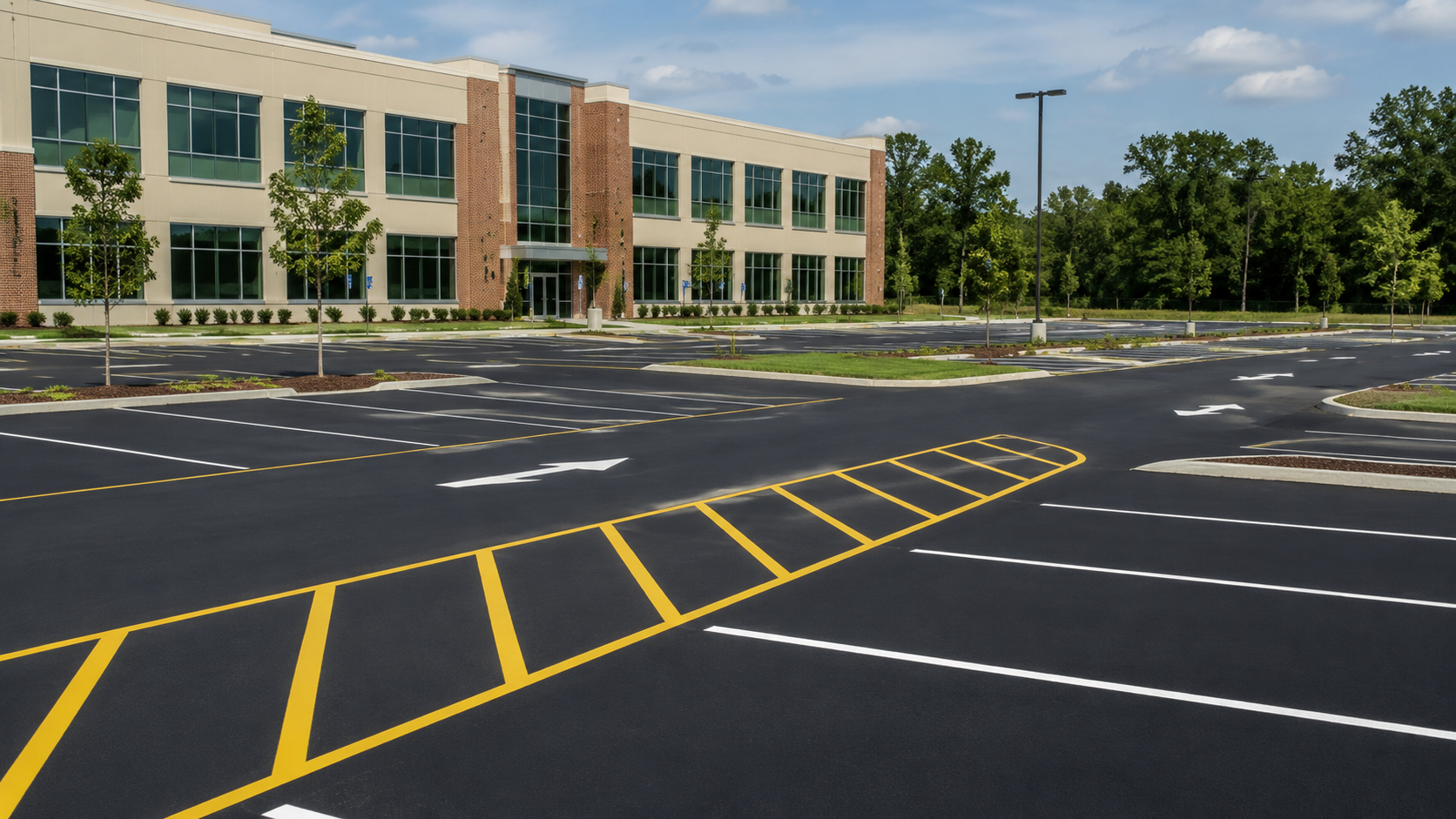
Spring — particularly March through May in the Huntsville area — is the most reliable window for commercial parking lot striping. Air temperatures are in the 55°F to 80°F range, asphalt surface temperatures are moderate, UV intensity is lower than summer, and rain events are predictable enough that contractors can typically schedule around them with a day or two of lead time. Paint applied in spring conditions cures uniformly, bonds well to the asphalt, and tends to look sharp and bright from the first application.
Spring also aligns well with property maintenance cycles. Many property managers in North Alabama use March and April to address winter damage and prepare for higher-traffic summer and fall seasons. Sealcoating contractors are busy in spring, and the most efficient approach is to sealcoat in late March or April and schedule striping for three to four weeks after the sealcoat cure — typically landing in April or May. See our guide on striping after sealcoating for more on that sequence.
Fall: September Through November
The fall window — September through early November — is the second-best period for striping in North Alabama. Temperature conditions are similar to spring: moderate air and surface temps, lower UV intensity as the days shorten, and typically drier pavement than the wet spring months. Contractors are often less booked in fall than spring, which can mean more scheduling flexibility and sometimes shorter lead times for commercial jobs.
The risk in fall is the later end of the window. By mid-November in North Alabama, morning temperatures can drop into the 40s, which starts to push against the lower threshold for traffic paint application (typically 50°F surface temperature). Jobs scheduled for late November need flexible scheduling to account for overnight lows. October is generally the most reliable fall month.
Summer: Workable But Demanding
Striping in the summer — June through August — is done regularly in North Alabama, but it requires more careful management. The primary challenge is asphalt surface temperature. On a clear July afternoon in Huntsville, blacktop surface temperatures can reach 140°F to 160°F. At those temperatures, water-based traffic paint can flash-dry on contact, which creates lines that look good initially but haven't bonded properly to the surface. The result is paint that peels or wears much faster than paint applied in optimal conditions.
Experienced contractors handle this by scheduling summer jobs for early morning starts — typically 5 to 7 a.m. — before the asphalt has had time to heat up. In many cases, surface temperatures in the early morning are in the 80°F to 100°F range, which is workable for most paint formulations. By 9 or 10 a.m. in peak summer, the window is often closing. Overnight work is another approach for summer jobs on commercial properties that can accommodate after-hours access.
If you have a summer deadline — a grand opening, an inspection, a tenant move-in — communicating the timing constraint early gives your contractor the best chance of getting on the schedule during a workable window.
Winter: Possible in Mild Stretches
Winter striping in North Alabama is not common, but it's possible during the mild stretches that are a feature of the region's climate. Huntsville averages overnight lows in the mid-30s in January but frequently sees stretches of several days with daytime temperatures in the 50s and 60s. If an asphalt surface reads above 50°F and the forecast is clear for several hours post-application, an experienced contractor may be willing to schedule a winter job.
The practical limitation is that there's no guarantee of those windows, and a cold snap or rain system can push a scheduled job multiple times. For property owners with flexible timing, winter can be a way to get striping done during an off-peak period — sometimes with better contractor availability and pricing flexibility. For property owners with a hard deadline, winter scheduling is higher risk.
Rain: The Variable That Matters Most Day-to-Day
Regardless of season, rain is the main scheduling variable that causes jobs to move. Fresh traffic paint needs two to four hours minimum of dry conditions after application before it can handle rain exposure without washing or smearing. Many contractors prefer a six-hour dry window for newly painted lots. In spring and early fall in North Alabama — seasons that see regular afternoon thunderstorms — this means monitoring the forecast carefully in the 24 to 48 hours before a scheduled job.
Most contractors will call a job if significant rain is forecast within four hours of the planned completion time. This is normal and not a scheduling failure — it's the right call for paint quality. Build at least one or two days of weather buffer into any schedule where timing is important.
UV and Paint Longevity by Season
The timing of your restripe also affects how long the lines last. Paint applied in spring and fall — under moderate UV — tends to hold its brightness longer than paint applied in peak summer, which immediately starts experiencing high UV intensity. This is a marginal difference rather than a dramatic one, but over a four to five year restripe cycle, spring-applied lines often still look noticeably brighter than summer-applied lines when they hit the three-year mark.
When to Schedule for Your Property Type
For most commercial property types in Huntsville — retail centers, medical offices, churches, apartment complexes — the recommendation is to target April or October for your restripe, with a fallback window of March or November if those months fill up. For industrial and warehouse properties that need floor marking work, interior conditions are more stable year-round — concrete warehouse floors maintain consistent temperatures that make scheduling less season-dependent.
If you're planning a sealcoating and striping project together, the sequence is: sealcoat in late March or early April, allow 21 to 30 days for full cure, then stripe in late April or May. This hits the spring sweet spot for both applications and sets the lot up for the summer season in the best condition.
Get on the Schedule Early
Spring and fall are busy for North Alabama striping contractors. If you're targeting a specific window, requesting your estimate and getting on the schedule four to six weeks ahead gives you the most flexibility. Last-minute requests in peak season often result in longer waits or less desirable scheduling windows. Visit the Huntsville Stripe Pros homepage to request a free estimate for your Huntsville, Madison, Decatur, or Athens property.