Sealcoating and Striping: They Always Go Together
If you've scheduled a sealcoating project for your Huntsville commercial property — or if your sealcoating contractor has already been and gone — you've likely discovered that fresh sealcoat completely covers every line, symbol, and marking that was previously on your lot. That's expected. Sealcoat is designed to form a continuous, protective layer over the asphalt surface, which means existing striping disappears under it. Restriping after sealcoating isn't optional — it's the final step that makes the lot functional again.
This guide covers everything Huntsville, Madison, Decatur, and Athens property managers need to know about sequencing striping after sealcoating: how long to wait, what to plan, how to coordinate the two contractors, and what decisions to make before the striping crew arrives.
Why Sealcoating Covers Existing Lines
Traffic paint bonds to the asphalt surface at a molecular level, but it sits on top of the pavement rather than penetrating into it. Sealcoat — whether coal tar or asphalt-based emulsion — is applied as a liquid that spreads across the entire surface and cures into a uniform protective layer. That layer covers everything underneath it, including paint. There is no way to sealcoat a lot and preserve the existing lines. The two steps must happen in sequence: sealcoat first, cure, then stripe.
Some property owners ask whether the sealcoating contractor can "paint around" the lines. This is not how commercial sealcoating works. Attempting to mask individual stalls or arrows before sealcoating creates adhesion problems, an uneven surface, and visible tape lines — none of which produce a professional result. The correct workflow is a clean sealcoat application followed by fresh striping once the sealcoat has properly cured.
How Long to Wait Before Striping
Striping too soon after sealcoating is one of the most common mistakes commercial property owners make when managing this process. If traffic paint is applied before the sealcoat has fully cured, it won't bond properly. Lines may peel, bubble, or smear — requiring the striping job to be redone at additional cost.
The typical wait time after sealcoating before striping is 24 to 48 hours, but this varies based on several conditions specific to the Huntsville climate:
- Temperature. Sealcoat cures faster in warm, sunny conditions. On hot North Alabama summer days above 85 degrees Fahrenheit, cure time may be on the shorter end of the range. On cooler spring or fall days, plan for the full 48 hours or more.
- Humidity. High humidity — common in Huntsville from May through September — slows cure time. If the lot was sealed during a humid stretch, give it more time before striping.
- Coat thickness. Some contractors apply a second coat of sealcoat, which extends cure time. Verify with your sealcoating contractor how many coats were applied and what their recommended wait time is.
- Shade and air movement. Areas of the lot in permanent shade or with limited air movement may take longer to cure than open areas in direct sunlight.
When in doubt, defer to your sealcoating contractor's guidance. A reputable contractor will give you a specific recommendation for your lot based on the conditions on the day of application.
What to Decide Before the Striping Crew Arrives
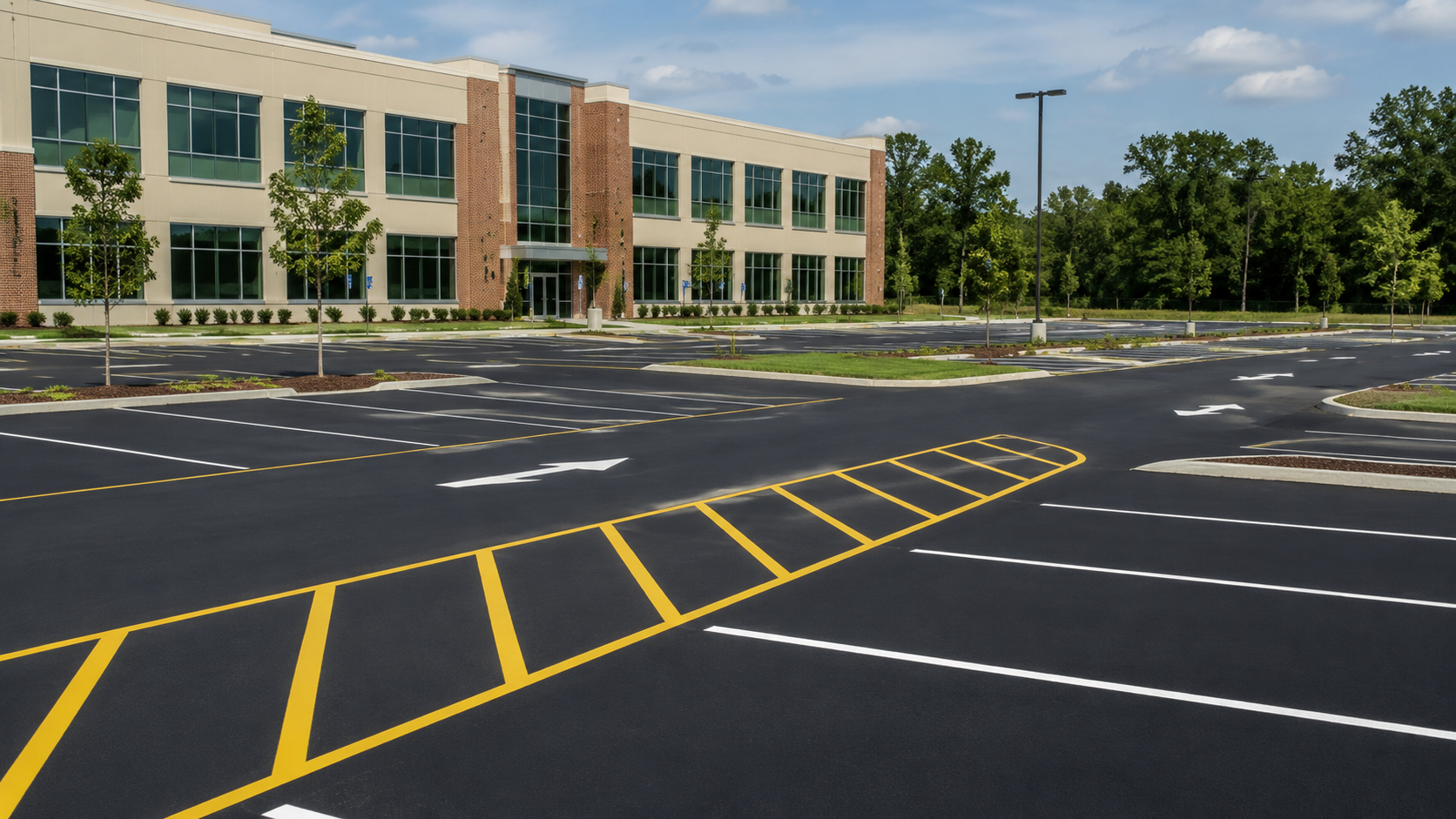
Once the sealcoat is cured, the striping crew will be working on a completely blank surface. If your old layout was adequate — correct stall count, properly positioned ADA spaces, clear directional flow — the crew can typically reproduce it from reference measurements or photos taken before sealcoating. But this is also a natural opportunity to make layout changes.
Questions worth thinking through before your striping appointment:
- Is the current layout still appropriate? If tenants have changed, occupancy has grown, or the property has been reconfigured since the last stripe job, the old layout may no longer be optimal.
- Do the ADA stall counts still match your total parking count? Federal requirements tie the number of required accessible spaces to total lot size. If you've added spaces since the last restripe, verify that your accessible space count still meets the minimum ratio.
- Do you need new or updated markings? This is an ideal time to add arrows, update stencils, repaint fire lane curbs, add crosswalks, or clarify loading zones — rather than treating those as separate projects later.
- Do you have photos or measurements of the old layout? If the crew is reproducing an existing layout, having reference photos of stall positions, ADA areas, and directional arrows speeds up the layout process and reduces the risk of errors.
Coordinating the Two Contractors
In an ideal scenario, the sealcoating and striping contractors are either the same company or have an established working relationship. Many striping contractors in the Huntsville area also offer sealcoating, or work with a preferred sealcoating partner. This simplifies scheduling, eliminates the cure-time guesswork, and ensures the striping crew knows exactly what surface they'll be working on.
If you're using separate contractors, confirm the following before finalizing either appointment:
- Ask the sealcoating contractor for their recommended cure time before striping
- Schedule the striping appointment at least 48 hours after the sealcoating is scheduled to complete, with buffer for weather delays
- Share the sealcoating contractor's recommended wait time with the striping contractor
- Confirm both contractors understand the lot will be closed to traffic until both steps are done
Our dedicated sealcoating and striping partner page covers how to find contractors who coordinate both services in the Huntsville area.
Planning Lot Access During the Process
Sealcoating typically requires the lot to be closed for a minimum of several hours, and often overnight. Striping requires an additional closure window while paint cures — typically 30 to 60 minutes for standard traffic paint to be dry enough to allow foot traffic, and longer before vehicles should drive over fresh lines. You'll want to communicate clearly with tenants, employees, and customers about the closure schedule and arrange alternative access or overflow parking if needed.
Properties with multiple parking areas can sometimes stage the project in sections — sealing one half of the lot while keeping the other half in use, then switching. This approach takes more coordination but may be the only option for locations that cannot fully close. Discuss this with your contractor in advance, as it affects the project timeline and cost.
After Striping Is Complete
Once both sealcoating and striping are complete, do a final walkthrough before reopening the lot to full traffic. Verify that:
- All stalls are clearly marked and correctly positioned
- ADA spaces and access aisles are complete and legible
- Directional arrows are pointing correctly
- Fire lane and curb markings are in place
- Paint has fully dried in all sections before vehicles park on lines
Take a set of photos of the completed lot. These become your reference for the next restripe project and document the condition of the markings at the time of completion.
Get Striping Scheduled After Your Sealcoating Project
If your lot has been sealcoated and you need striping scheduled, or if you're planning a combined sealcoat and restripe project this season, request an estimate on our Huntsville parking lot striping page or submit a request directly from the homepage. Include photos of your current lot, your approximate stall count, and your preferred scheduling window.