Signs Your Lot Is Overdue for Restriping
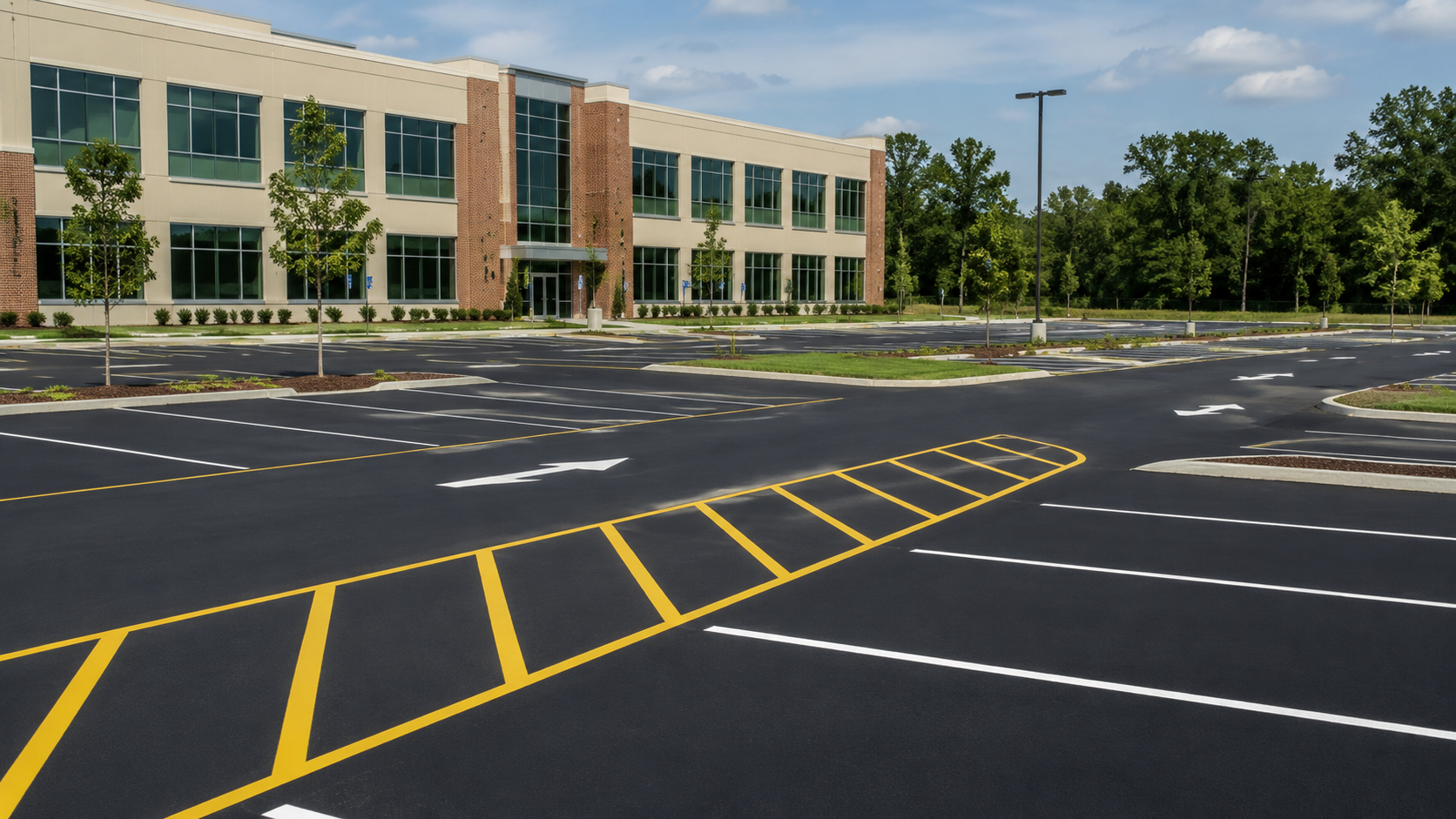
Fading happens gradually, which means property managers often don’t notice how worn a lot has become until a tenant, customer, or inspector points it out. There are clear signals that a restripe should move up the maintenance calendar. Stall lines that are barely distinguishable from the asphalt surface are the most obvious indicator, but there are subtler signs too. Drivers pulling into your lot at odd angles, parking across two spaces, or avoiding certain sections of the lot entirely often signal that the stall layout has become unreadable. Invisible fire lane markings are a serious concern: if a curb or pavement stencil has faded to the point where a driver cannot see the restriction, the fire lane becomes a de facto parking zone and creates a genuine safety risk. Worn directional arrows are another common problem on busy lots. When drivers can’t tell which lanes are one-way, the result is head-on near-misses and congested aisles. Faded crosswalk markings at building entrances reduce pedestrian visibility, especially in lower light conditions during morning and evening hours. ADA accessible stall symbols and access aisle hash marks that have worn away make it harder for people who need those spaces to identify them quickly, and for others to recognize that the space is designated. If your property is approaching a lease renewal, pre-sale inspection, insurance review, or an upcoming high-traffic season, a restripe is a straightforward improvement that makes the lot look maintained and function correctly.
Restriping After Sealcoating or Paving Repairs
Two of the most common triggers for a restriping project are sealcoating and paving repairs. Sealcoating covers the entire asphalt surface with a protective layer that darkens the pavement and extends its service life, but it also covers every stripe on the lot. After sealcoat cures — typically a minimum of 24 to 48 hours depending on temperature and product — the lot needs to be fully restriped before it can be returned to normal use. This is actually an ideal moment to review the current layout and make any changes: adding an ADA space that was missing, adjusting fire lane locations, relocating arrows to improve traffic flow, or increasing stall counts if the original layout was inefficient. Paving repairs that involve patching or milling sections of the lot will similarly obliterate markings in the repaired areas. Even if only a portion of the lot was repaired, the visual contrast between freshly painted patches and faded surrounding lines can make the whole lot look inconsistent. In many cases, property managers opt to restripe the entire lot after paving work is done to give the surface a uniform, finished appearance. When requesting a restripe estimate after sealcoating or paving, providing the expected cure or completion date for that work helps providers schedule the striping job to follow at the appropriate time.
Incorporating ADA Refreshes During a Restripe
A full lot restripe is the natural time to evaluate accessible parking markings and bring them up to current condition. Over years of sun exposure and traffic, ADA-related markings tend to fare worse than standard stall lines because they often include blue surface paint, ISA symbols, and access aisle hash marks — all of which require more detail work and are more susceptible to wear. During a restripe, providers can repaint accessible stalls with proper dimensions, refresh or paint new access aisles with the correct width and hash mark pattern, repaint ISA pavement symbols, and restore blue surface color where it has faded. Property owners should note that while repainting faded accessible markings to their original condition is straightforward, any changes to stall count, dimensions, or location should be reviewed against current ADA standards before proceeding. This page provides general information about restriping services and is not legal advice or a compliance guarantee. Property owners are encouraged to verify accessible parking requirements with a qualified professional or the appropriate authority before finalizing layout changes. That said, simply refreshing what is already there is usually a clear maintenance win with no layout decisions required.
How Huntsville’s Weather Affects Restripe Timing
Huntsville’s climate creates a fairly wide striping season, but weather still matters for scheduling restripe projects. Alabama summers bring high heat and humidity, which can accelerate paint drying in some cases but also creates problems if a brief afternoon thunderstorm rolls through mid-job — not uncommon during July and August. Most water-based traffic paints should not be applied to wet or damp surfaces, and rain on fresh paint can streak or dilute markings before they cure. Spring and fall tend to offer the most consistent conditions for exterior striping: moderate temperatures, lower humidity, and more predictable daily weather windows. Winter striping is possible during mild stretches, but paint performance can suffer if temperatures drop below around 50 degrees Fahrenheit during application or cure. For property managers planning ahead, scheduling a restripe in late spring or early fall typically gives the best combination of weather reliability and contractor availability. For urgent situations — such as a restripe needed after emergency paving repairs or before a major upcoming event — scheduling flexibility can be factored in when requesting an estimate. Sharing your preferred completion window and any hard deadlines at the time of inquiry helps providers assess feasibility.
Cost Factors for Restripes Versus New Layouts
Restriping an existing lot following the original layout is generally less expensive than laying out a new design from scratch, but the final cost of any project depends on several variables that only a site-specific estimate can fully capture. For a restripe, the main cost drivers are lot size measured in linear feet of striping or total stall count, the condition of the existing lines (clearly visible lines are faster to follow than nearly invisible ones), the number of specialty markings like arrows, ADA symbols, fire lane stencils, and crosswalks, and the amount of surface prep needed before paint can be applied. For a new layout, additional cost factors include measuring and layout planning, the decision to remove or black out old conflicting lines, and any changes to the number or placement of ADA spaces, fire lanes, and traffic flow elements. Per-stall pricing is common for straightforward restripes, while larger projects with extensive specialty markings are often quoted based on the full scope of work. When requesting an estimate, describing the current condition of your lot, whether the layout is staying the same, the approximate number of stalls, and any specialty markings needed will result in a more accurate quote. Properties with multiple sections, garage decks, or unusual layouts may benefit from an on-site evaluation before a final estimate is provided.
Scheduling Overnight and Minimizing Disruption
For retail centers, medical offices, restaurants, and other active commercial properties in Huntsville, shutting down a parking lot entirely during business hours is rarely practical. Restriping an active lot requires a plan that minimizes the impact on tenants and customers while giving the crew enough unobstructed time to complete the work cleanly. Overnight scheduling is the most common approach for high-traffic lots. Work typically begins after the lot quiets down in the evening and wraps up before morning traffic picks back up. This window works well for retail centers, restaurants, and offices that experience low vehicle counts between roughly 10 PM and 6 AM. For 24-hour properties — such as hospital campuses, convenience stores, or certain logistics facilities — section-by-section phasing may be the best option. Cones and barricades are used to cordon off the active work area while the rest of the lot remains available. Properties with large lots may need multiple overnight or early-morning sessions to complete the full restripe. Apartment communities present a different scheduling challenge because residents park overnight, making weekday daytime windows sometimes more practical than overnight work. When requesting an estimate, sharing your operating hours, peak traffic periods, and any constraints on lot closures allows providers to propose a realistic scheduling plan.