
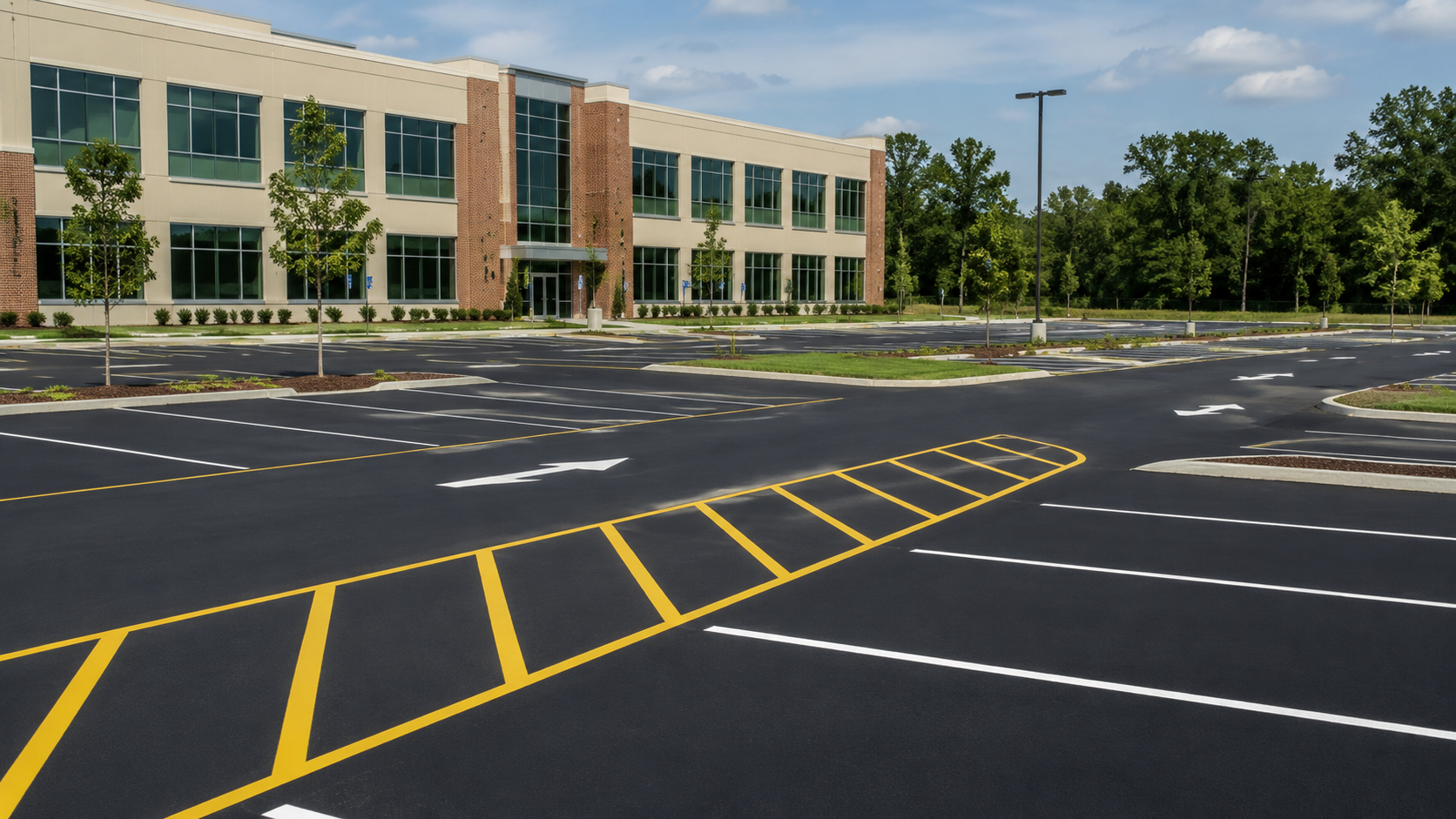
The Short Answer — and Why It's Not That Simple
Most commercial parking lots in Huntsville, AL should be evaluated for restriping every 12 to 24 months. That's a useful benchmark, but it isn't a hard rule. The right interval for your specific property depends on traffic volume, the type of paint used, weather exposure, whether the lot has been sealcoated, and how visible your current markings actually are on a sunny morning when guests, tenants, or customers pull in.
A high-traffic retail center on University Drive may need restriping annually. A low-traffic church parking lot on the south side of Madison might go three or four years between refreshes and still look sharp. Understanding the factors that accelerate line wear helps you build a maintenance schedule that makes sense for your property — rather than guessing.
Why Parking Lot Lines Fade
Traffic paint is tough, but it's not permanent. The primary causes of fading on commercial lots in North Alabama include:
- UV exposure. Huntsville averages around 199 sunny days per year. Ultraviolet light breaks down the pigments in traffic paint over time, washing out both white and yellow lines. South-facing lots and uncovered surfaces in direct sun fade faster than shaded areas.
- Vehicle traffic. Tires physically wear at paint over repeated passes. High-turn parking areas near entrances, drive-through lanes, and loading zones tend to fade faster than low-traffic areas at the back of the lot.
- Seasonal weather. North Alabama sees hot, humid summers and occasional freeze-thaw cycles in winter. Temperature swings cause asphalt to expand and contract, which gradually loosens the bond between paint and surface. Ice, snow removal, and road salt treatments can accelerate this in colder months.
- Sealcoating. If your lot was sealcoated after the last stripe job, the sealcoat layer will have covered the paint. Striping must always follow sealcoating — not precede it.
- Pavement deterioration. Cracking, raveling, or patched asphalt creates uneven surfaces that hold paint poorly. If the pavement itself is degrading, lines will fade and chip faster regardless of paint quality.
Signs Your Lot Is Overdue for Restriping
You don't always need to wait for the 12-month mark. If you notice any of the following on your Huntsville property, it's time to request a restripe assessment:
- Stall lines are difficult to see from a moving vehicle in daylight
- ADA accessible space markings, wheelchair symbols, or access aisle indicators are faded or missing
- Directional arrows are no longer clearly visible, causing confusion in one-way aisles
- Customers or tenants are regularly parking outside the intended stall layout
- Fire lane curb markings have faded or been partially covered
- Stop bars at exits or pedestrian crosswalks are difficult to see
- Your lot was recently sealcoated and the lines were covered
- You've received a notice from an inspector or tenant about faded accessible parking markings
Some of these signals — particularly faded ADA markings — are not just cosmetic. Accessible parking areas that are unclear or poorly marked create practical and potential compliance concerns for commercial property owners. It's worth staying ahead of those situations rather than responding to complaints.
Restriping After Sealcoating
Sealcoating resets the clock on your pavement's appearance and extends its life significantly. But sealcoat completely covers existing paint lines, which means every stall, arrow, ADA symbol, fire lane designation, and curb marking must be reapplied after the sealcoat cures. The sealcoat contractor will typically advise on cure time before striping can proceed — usually 24 to 48 hours depending on temperature and humidity, though this can vary.
If you're planning a sealcoating project this spring or summer, coordinate the striping work in advance so there's no gap in your lot's usability. Our full guide on striping after sealcoating in Huntsville covers the sequencing and planning process in detail.
Property Types and Typical Intervals
Different property categories tend to have different natural restriping rhythms based on traffic patterns:
- Retail centers and grocery stores: High daily turnover; typically benefit from annual or 18-month evaluations. High-traffic approach lanes and entrance stalls show wear first.
- Medical offices and hospitals: ADA-accessible stalls are heavily used and warrant close attention. Annual evaluation recommended; ADA markings may need attention more frequently.
- Churches and places of worship: Lower daily traffic but concentrated weekly surges. Many church lots can go 2 to 3 years between full restripes, with spot touch-ups on high-wear areas.
- Apartment complexes: Constant low-to-moderate traffic with tenants using the lot daily. 18 to 24 months is a common interval, with assigned or numbered stalls checked annually.
- Industrial and warehouse facilities: Exterior lots vary widely. Interior warehouse floor markings in high-forklift-traffic areas may need annual refresh; safety lines in particular should be kept sharp.
- Office parks: Generally moderate traffic, mostly Monday through Friday. 2 to 3 year intervals are common for well-maintained surfaces.
How to Evaluate Your Own Lot
You don't need a professional assessment to get a general sense of whether your lines are holding up. Walk your lot on a clear morning and look at the pavement from the perspective of a driver approaching a stall. Can you clearly see where to position your vehicle? Are ADA markings legible? Are arrows pointing where they should be pointing? Is the fire lane curb obviously marked?
If you're squinting or second-guessing what you see, so are your visitors. Take photos and include them in your estimate request — they'll help any contractor give you a more accurate quote without requiring a site visit first.
What Happens If You Wait Too Long
Beyond the obvious aesthetic issues, significantly faded striping creates real operational problems. Customers park randomly, blocking drive aisles or taking up double the space intended. Tenants complain. Delivery trucks park in the wrong areas. And when ADA markings degrade to the point where accessible spaces aren't clearly designated, that's a more serious concern for commercial property owners and managers.
The cost difference between proactive maintenance and emergency restriping (where you need the lot done urgently around a tenant's reopening or a surprise inspection) is meaningful. Staying on a planned interval also helps you budget the work predictably as a recurring property maintenance expense.
Ready to Schedule a Restripe Assessment?
If you manage a commercial property in Huntsville, Madison, Decatur, Athens, or the surrounding North Alabama area and you're not sure whether your lines are still in good shape, a quote request is the best starting point. Include photos of your current lot along with your property type and approximate stall count, and we'll connect you with a qualified local striping contractor.
Visit the parking lot restriping page to learn more, or go to the homepage and submit a quick estimate request.